
Part 2: Rooted Again: How Black Communities Are Reclaiming the Land
This two-part series was written by Jubilee Staff member Beguey Ndiaye, who manages and creates content for the Jubilee Farms social media page. Beguey is currently a student at Towson University and works parttime enhancing the visual aesthetics of Jubilee Farms.
Please revisit Part 1 of the series, Black Farming, Land, and the Legacy of Incarceration
Something is growing. Across the United States, a quiet but powerful movement is taking root, one that refuses to let land and farming remain symbols of exploitation.
Black farmers, activists, urban growers, and formerly incarcerated individuals are reshaping what it means to work the soil, rewriting the story from the ground up. This is Part 2 of our series. If Part 1 was about what was taken, this is about what is being reclaimed.
Land ownership has always been about more than property. It is about power, stability, and the ability to pass something real to the next generation. When Big Boi, one half of the legendary rap duo OutKast, bought a 40-acre ranch outside Atlanta, it was not just a lifestyle choice. It was a statement. The number was not accidental. Forty acres. The same promise dangled and snatched away after emancipation. His ownership of that land is a reclamation, a refusal to let that history be the final word.
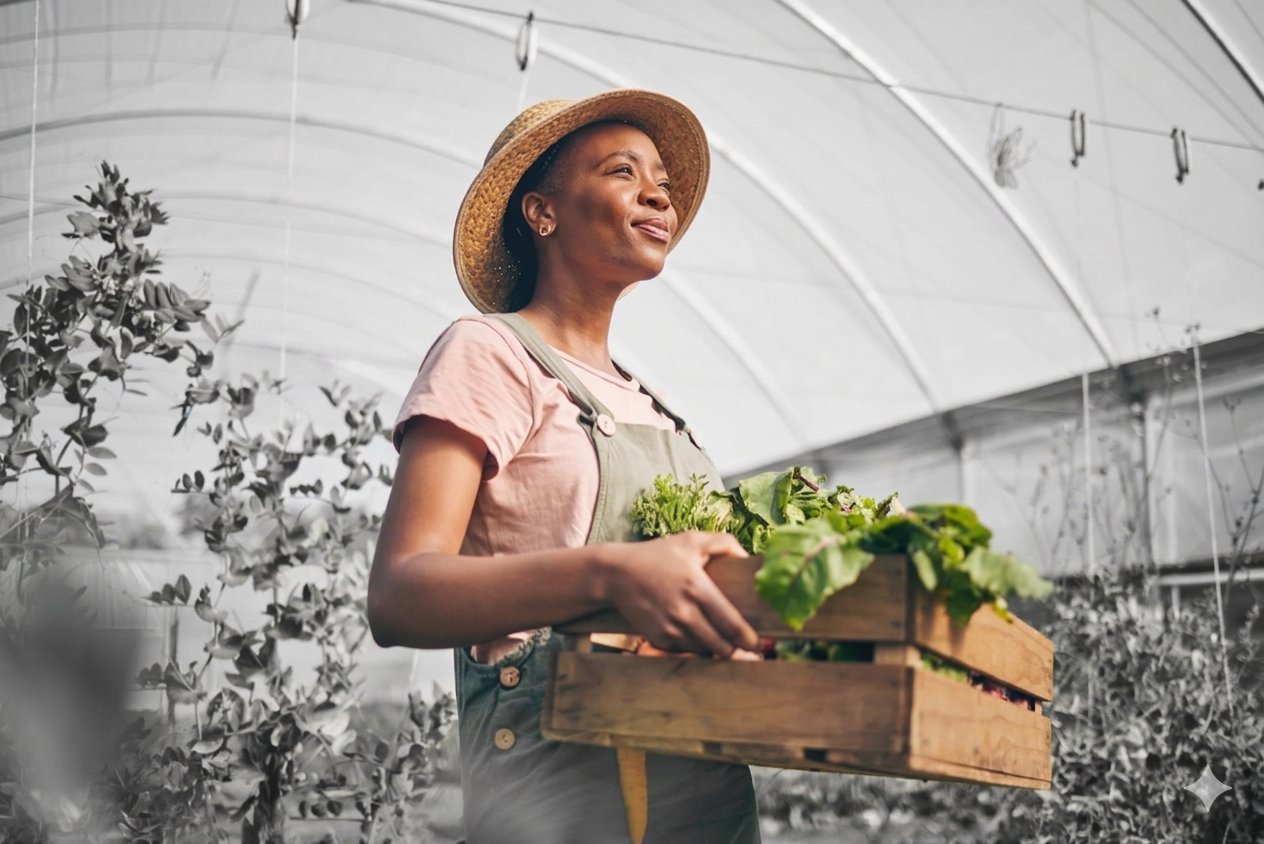
He is not alone. Across social media and within local communities, a new generation of Black farmers is emerging, young, urban, digitally savvy, and deeply intentional about why they are growing food and who they are growing it for. Farming is being reframed, not as a relic of oppression, but as an act of autonomy, sustainability, and cultural pride. You do not need 40 acres to make a difference. Sometimes a greenhouse in a housing complex is enough to change lives.
Urban Farm Within a Housing Community
Jubilee Farms is an hydroponics and aquaponics-based urban farm embedded within a deeply affordable housing community in Washington, D.C. It does not just grow food; it grows futures. Operating year-round, the farm produces fresh, hyperlocal produce for a community that has long been underserved by the conventional food system.
But what makes Jubilee Farms particularly powerful is who it employs and trains. The farm creates real workforce pathways for justice-involved individuals, people returning from incarceration who face enormous barriers to employment, stability, and community reintegration. Through hands-on agricultural training, paid employment, and partnerships with local organizations, Jubilee offers something rare: a second chance rooted in real soil. This is not a charity. This is a strategy. The farm understands that you cannot separate food justice from criminal justice, that healing communities requires addressing both where people live and what has been done to them.
Reclamation & Restoration
Reclamation requires more than will; it requires knowledge, resources, and institutional support. That is where places like the University of the District of Columbia come in. UDC has invested in urban agriculture training and workforce development programs that specifically reach communities impacted by the justice system. These programs treat agricultural education as a form of empowerment, building practical skills while also reconnecting participants to a lineage of Black agricultural expertise that stretches back centuries.
When a formerly incarcerated person learns to grow food, manage an aquaponics system, or run a community garden, they are not just gaining job skills. They are inheriting a tradition. They are participating in an act of restoration that connects them to something far larger than themselves.
Farming is not just about what you grow. It is about whose hands are in the soil, and whose future is being cultivated.
The communities most impacted by food insecurity, land dispossession, and mass incarceration are overwhelmingly the same communities. That is not a coincidence it is a design. Generations of deliberate policy created these overlapping crises.
But here is what the data also shows: organized, community-led agriculture works. Urban farms reduce food deserts, create employment, build social cohesion, and provide a stabilizing anchor for neighborhoods under pressure. Reentry programs that integrate agricultural work show promising results in increasing long-term employment outcomes. The soil, it turns out, is a site of healing.
Reclamation is not a moment. It is practice. It happens every time a Black family plants a garden where a vacant lot once stood. Every time a young person leaving incarceration learns that the land can receive them with dignity. Every time an urban farm produces food for a community that has been told, generation after generation, that it does not deserve nourishment.
The history is heavy. But the present is alive with possibility. And the future, the one being built in community gardens and aquaponics facilities and on 40-acre ranches outside of Atlanta, belongs to the people who are willing to get their hands in the dirt.
Jubilee Farms is part of a growing network of organizations reimagining urban agriculture as a tool for justice and community healing. To learn more, get involved, or support this work, reach out to your local food justice coalition or reentry organization.