
Building Farms for the Future: Creating Our Own SeAsons
Read Building Farms for the Future: Introduction and stay tuned for this multi-part series.
By Alex Coonrod, Manager, Jubilee Farms
One of the greatest challenges in agriculture has always been timing. Farmers have always worked with the seasons. They understand when to plant, when to harvest, and how to adjust their practices based on the conditions around them. The success of a crop depends on having the right combination of sunlight, temperature, humidity, water, and nutrients at the right time.
But what happens when those conditions become unpredictable? What happens when a season that once followed a reliable pattern begins to change?
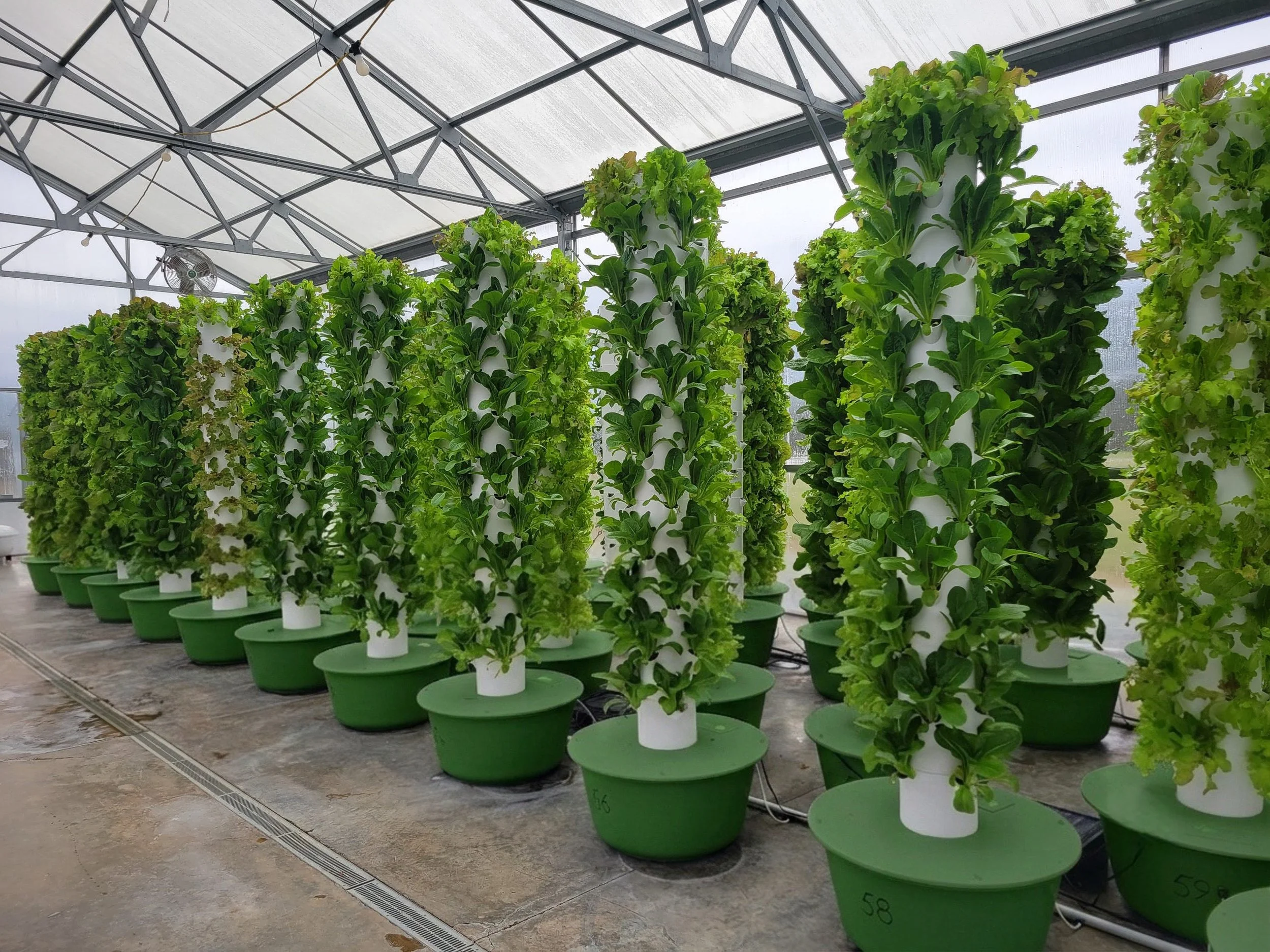
This is where a new approach to agriculture begins to transform the way we think about growing food. Indoor farming is a form of Controlled Environment Agriculture (CEA). At its simplest, CEA means creating and managing the ideal conditions plants need to grow instead of leaving those conditions entirely up to chance.
Rather than waiting for the perfect growing season, we create it.
Think about the difference between growing a plant outside and growing one in a carefully managed environment. Outside, a farmer has to respond to whatever nature provides. A sudden heat wave, unexpected cold temperatures, excessive rainfall, drought, or pest pressure can quickly change the outcome of an entire crop.
Inside a controlled environment farm, we have the ability to manage many of those variables. We can control temperature, humidity, lighting, irrigation, nutrient delivery, water chemistry, and other factors that influence plant health. By carefully managing these conditions, we create an environment where plants can grow more consistently throughout the year.
In many ways, we are creating our own seasons.
A plant does not know whether it is January or July. It responds to the conditions around it. If the environment provides the right temperature, the correct amount of light, proper nutrition, and adequate water, the plant has the opportunity to grow regardless of what is happening outside.
Plants have spent millions of years adapting to their surroundings. Every leaf, root, and stem has developed specific responses to temperature, light, moisture, and nutrients. CEA allows us to better understand those responses and create conditions where plants can thrive.
Consistency is one of the greatest advantages of CEA. In traditional farming, a crop can experience different conditions from one day to the next. A week of cloudy weather can reduce sunlight. A hot afternoon can increase plant stress. A heavy rain can change the balance of nutrients available in the soil.
Inside a controlled environment, we can reduce those fluctuations and provide plants with a more stable foundation. This stability creates opportunities that were once difficult to imagine.
Fresh produce can be grown closer to urban communities. Food production can happen year-round instead of only during certain seasons. Farmers can use resources more efficiently by delivering water and nutrients directly to plants when they need them. Production can become more predictable, allowing farms to better plan harvests and meet the needs of their customers.
However, creating the perfect growing environment requires more than simply placing plants indoors because a farm is a living system. Like all living systems, every decision affects every other part of the process and influences how the entire system functions.
Temperature influences plant growth. Humidity affects how plants move water through the stomata in their leaves. Lighting determines how plants produce energy through photosynthesis. Water chemistry affects how efficiently roots absorb nutrients. Air movement influences plant strength and helps prevent disease. Each part of the environment works together.
Think of an orchestra. A single instrument playing out of tune can affect the entire performance. But when every instrument works together, the result is something much greater than any individual piece. A controlled environment farm works the same way.
The future of agriculture will depend on understanding these relationships and using technology to help us manage them more effectively. Sensors, automation, and data collection allow us to see what is happening inside the farm and make informed decisions based on real information rather than assumptions.
At Jubilee Farms, this is the foundation of what we are building.
We are creating a system that combines agricultural knowledge with modern technology to produce fresh food in a more consistent, efficient, and sustainable way. We are learning how to create ideal growing conditions, understand how plants respond to those conditions, and continually improve our methods with every crop cycle.
Creating our own seasons is not about separating ourselves from nature or controlling it. It is about understanding nature more deeply and aligning ourselves with its processes so we can work alongside them in new and innovative ways.
In the next installment of Building Farms for the Future, we will explore another critical piece of this system: how we collect, organize, and use data to make better farming decisions through digital farm management.