
Growing Food, Growing Opportunity: Rethinking What a Farm Can Be
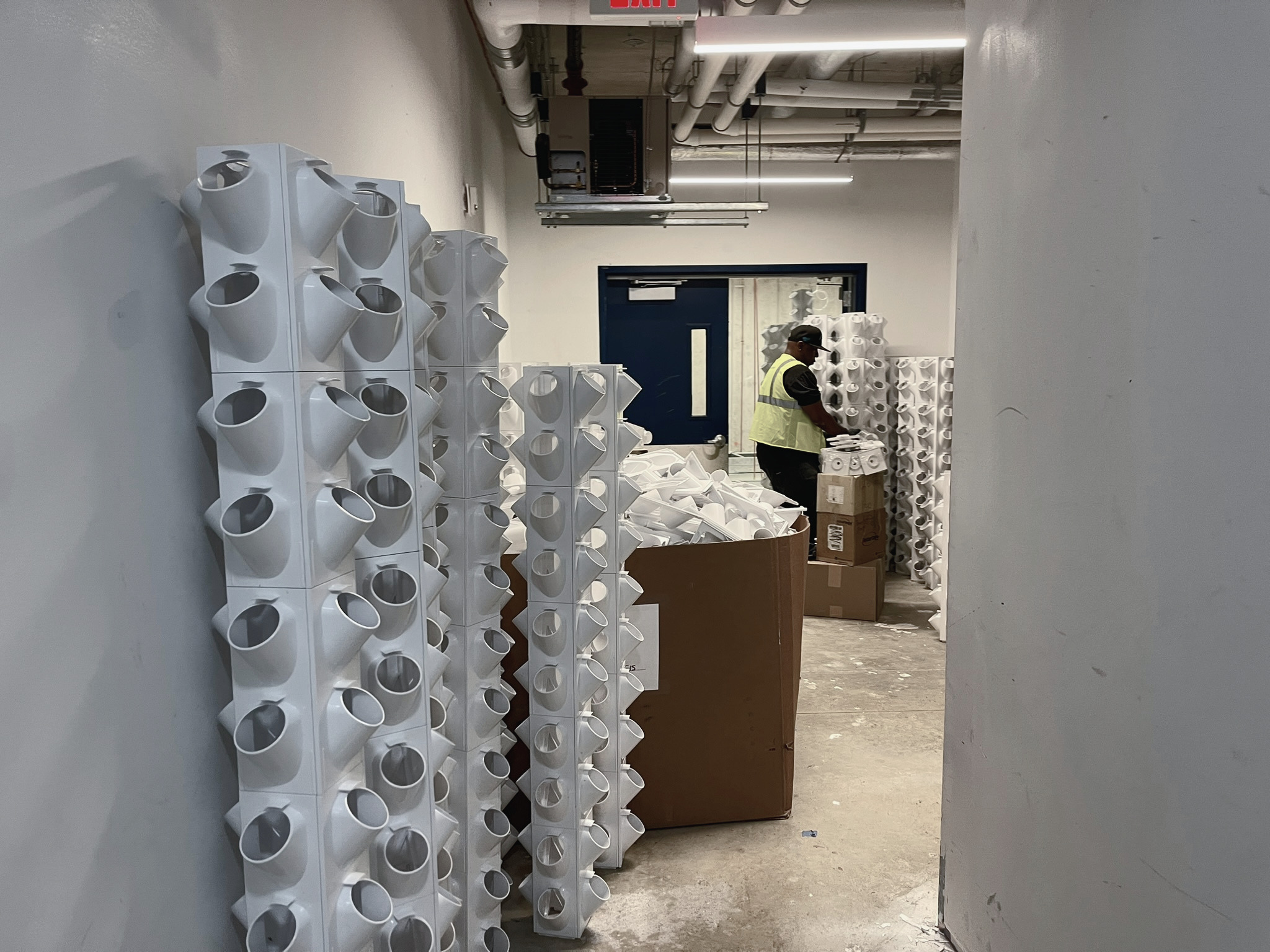
Towers being built for our basement farm
By Hadley Peterson, Jubilee Farms Summer Intern
Growing up on my family's farm in Alabama, I always thought farming meant rows of crops, tractors, healthy soil, and paying attention to the weather. That was the version of agriculture I saw growing up. Since starting my internship with Jubilee Farms, I've learned that farming can look very different from what I was used to seeing.
One of the biggest surprises for me has been learning about the idea of an urban cellar farm. Before this summer, I never would have imagined that fresh food could be grown in a basement or on a rooftop. The idea of using hydroponic and aquaponic systems to turn existing spaces into productive farms completely changed the way I think about agriculture.
Instead of depending on acres of farmland, these growing systems make it possible to produce fresh food in places where traditional farming simply is not an option. They also use resources efficiently and allow food to be grown much closer to the people who will eat it. As someone who grew up around traditional agriculture, it has been interesting to see how different approaches can work toward the same goal.
What stands out to me most about Jubilee Farms' vision is that this project is about much more than growing vegetables. The project has the potential to increase access to fresh food, but what excites me most is everything that comes along with it. It creates opportunities for people to learn new skills, explore modern agriculture, and experience a type of farming they may never have seen before. It also creates a space where education, innovation, and community can come together in a meaningful way.
Jubilee Farms is partnering with One World Fresh to bring hydroponic and aquaponic growing spaces to Ontario Place through planned basement and rooftop farms. While those growing systems are innovative, what makes this project special is the impact it can have on the people who experience it.
The educational piece is just as important as the food itself. Agriculture looks different for everyone. For me, it was growing up on my family's farm in Alabama. For someone living in the middle of a city, it could be walking into an urban cellar farm for the first time and seeing fresh produce growing in an unexpected place.
It takes an idea that seems unexpected and turns it into something that can strengthen a community. It shows that agriculture does not have to fit one image or happen in one type of place.
Whether it is a family farm in rural Alabama or a basement in Washington, DC, the goal is the same: creating opportunities and making fresh, healthy food more accessible to the people who need it.