
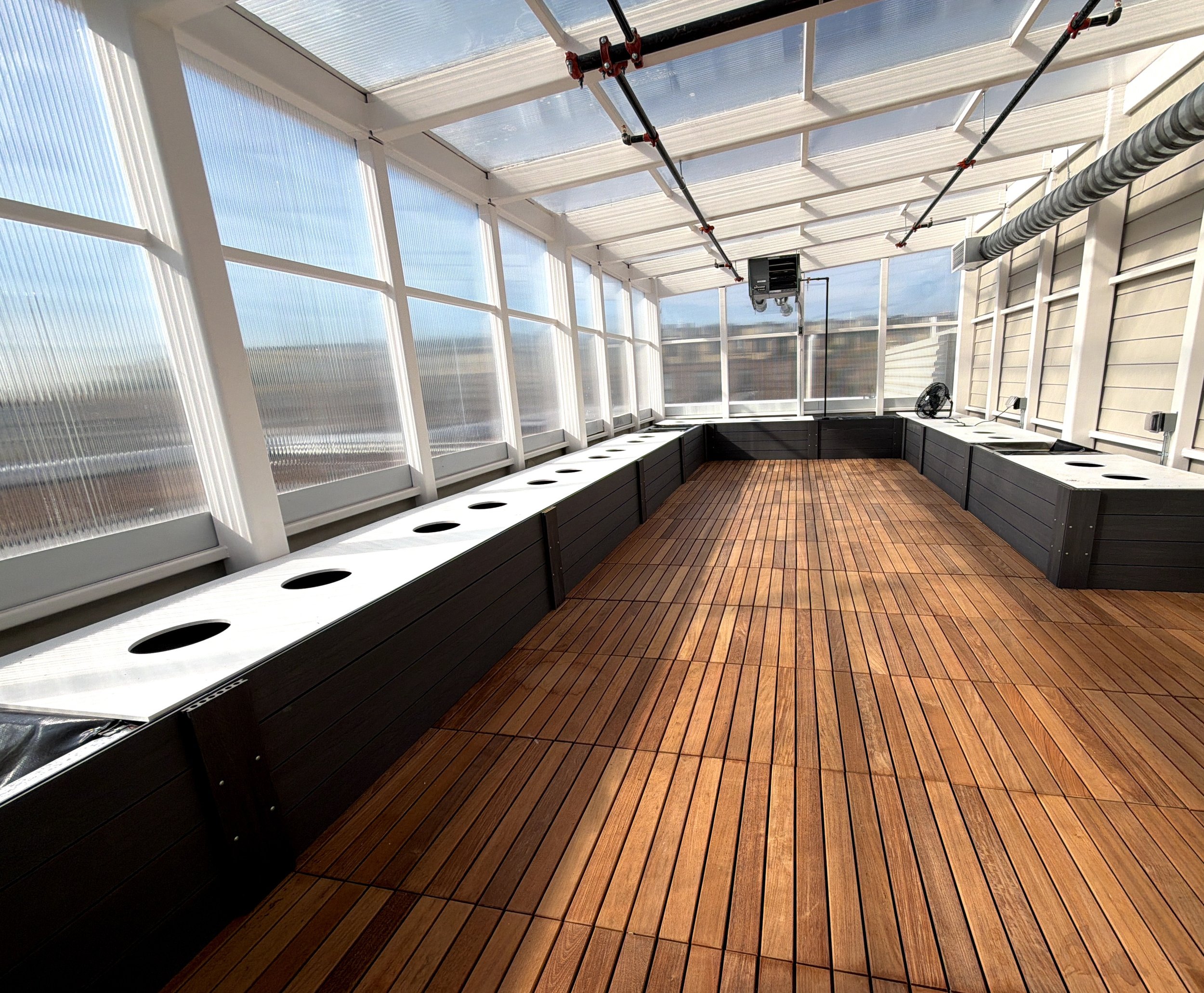
Jubilee Farms 4th Floor botanical sanctuary
The transition from incarceration back into the community presents challenges that extend well beyond securing housing, employment, and other basic necessities. People returning from incarceration often carry the psychological and emotional effects of an environment characterized by isolation, loss of autonomy, separation from loved ones, and exposure to trauma. For individuals already experiencing mental health challenges, these experiences can compound existing conditions and make successful reintegration more difficult. While transitional housing programs and clinical services address many immediate needs, an important part of recovery often remains overlooked: rebuilding a sense of identity, purpose, belonging, and connection.
Jubilee Housing’s Reentry Housing Program (RHP) provides a foundation for successful reintegration by helping participants access stable housing, employment opportunities, and social services. However, rebuilding a life requires more than meeting these basic needs. It also requires opportunities to restore confidence, develop healthy relationships, regain personal agency, and reconnect with oneself and the surrounding community. This is where Jubilee Farms’ fourth floor vision becomes particularly important.
What is Therapeutic Horticulure?
Therapeutic horticulture offers a practical, evidence-informed approach to addressing these less visible dimensions of recovery. Research has associated interaction with nature and horticultural activities with reductions in anxiety and depression, improved emotional regulation, increased self-esteem, and greater overall well-being.
Gardening provides a nonjudgmental environment in which individuals can practice patience, responsibility, adaptability, and care. The process of nurturing a living organism creates opportunities to experience accomplishment, establish routines, and redirect energy toward something constructive. For individuals whose experiences may have undermined their sense of autonomy and personal worth, caring for plants can become a meaningful way to rediscover their capacity to nurture, create, and grow.
Jubilee Farms’ fourth floor is being developed with this understanding in mind. Envisioned as a botanical sanctuary and space for restoration, it will extend the farm’s purpose beyond food production and workforce development. It will provide an environment where nature, education, research, and personal development intersect, creating opportunities for residents and community members to experience healing through meaningful engagement with the natural world.
GroWing New Roots
One expression of this vision is GroWing New Roots, a pilot therapeutic horticulture initiative developed by GroW For Health, a George Washington University health professions student organization developing health promotion programs based around horticultural activities, and the GW Psychiatry Student Interest Group. In partnership with Jubilee Farms, and under the supervision of Dr. Darshana Bhattacharyya, the medical director of GW’s Center for Resilience and Well-Being, GW health professions and graduate students will design and run a four month long program in which RHP participants will attend weekly gardening sessions on the fourth floor.
Participants will engage in plant cultivation activities, mindfulness practices, and group discussions that explore how the lessons they learn by caring for plants can help them better navigate the frustration, disappointment, and grief they may experience as they navigate the challenges of life post-incarceration.
The program will evaluate outcomes primarily using the Psychological Wellbeing Scale, a scientifically validated scale that assesses five aspects of wellbeing and happiness:
Autonomy
Environmental mastery
Personal growth
Positive relations with others
Purpose in life
To ensure that GroWing New Roots remains participant-centered, trauma-informed, culturally responsive, and directly aligned with the needs of individuals re-entering the community, the design of the programming and the evaluation methods will be informed by a community advisory board made up of previously incarcerated people, their family members, and service providers experienced in working with individuals returning to the community from incarceration.
Beyond simply providing an opportunity to engage in enjoyable horticultural activities, GroWing New Roots will support participants in rebuilding social connections and rewriting the next chapter of their lives beyond incarceration. Facilitated group discussions at the end of each gardening session will provide space for participants to explore how the lessons learned through taking care of plants can be applied to taking care of themselves and their loved ones.
The 4th Floor Investment
We hope this program will contribute to a nation-wide shift in the fields of criminal justice health and offender reentry that expands access to and investment in mental healthcare programs both within and outside of the clinical setting. We seek to demonstrate the transformative effect of cultivating relationships, creativity, and connection with nature on the mental health of all people, but particularly for those who have lived through incarceration and other similarly dehumanizing experiences.
Ultimately, Jubilee Farms sees the fourth floor as an investment in a dimension of recovery that traditional reentry services do not always address. By bringing people into a relationship with nature, one another, and their own capacity for growth, we aim to create a space where healing and personal development are considered fundamental aspects of the reintegration process. The goal should not simply be to help people return to society, but also to create opportunities for them to reshape their identities with a renewed sense of purpose, belonging, and interconnectedness with their community and environment.
Written by:
Sharad Wertheimer, Medical student, GW
Jesse Ross, Medical student, GW
Ben Bui, Medical student, GW
Linda Calderon, Neuropsychology researcher, Children’s National
Sam Davis, American Studies PhD candidate, GW
Devyn Doss, Anthropology masters student, GW