
by Beguey Ndiaye
Long before anyone used words like "companion planting" or "sustainable agriculture," Indigenous farmers across the Americas had a system that did both. They planted corn, beans and squash together, and each crop helped the others thrive. Many Native nations call these crops the Three Sisters.
At Jubilee Farms, we grow food in new ways, in urban spaces most people would never expect. But the idea at the heart of the Three Sisters is one we share: things grow stronger when they grow together.
A gift thousands of years in the making
The story of the Three Sisters begins with corn, which Indigenous peoples in what is now Mexico domesticated from a wild grass thousands of years ago. Over many generations, corn, beans and squash spread north. By the time Europeans arrived, Native farmers across much of North America were growing the three crops together.
The name "Three Sisters" is most closely tied to the Haudenosaunee (Iroquois) Confederacy. In Haudenosaunee tradition, the three crops are sisters and sacred gifts that sustain the people, and they are honored in stories, ceremonies and thanksgiving. Other nations, including the Cherokee, Wampanoag and many more, grew and honored these crops in their own ways.
Here in the Chesapeake region, the Nacotchtank and Piscataway peoples, whose homelands include the land now called Washington, DC, also farmed corn, beans and squash. When we grow food in this city, we follow in their footsteps.
How the sisters help each other
Traditionally, farmers built low mounds of soil and planted corn first. Once the stalks were a few inches tall, they planted beans and squash around them. Each sister then plays her part:
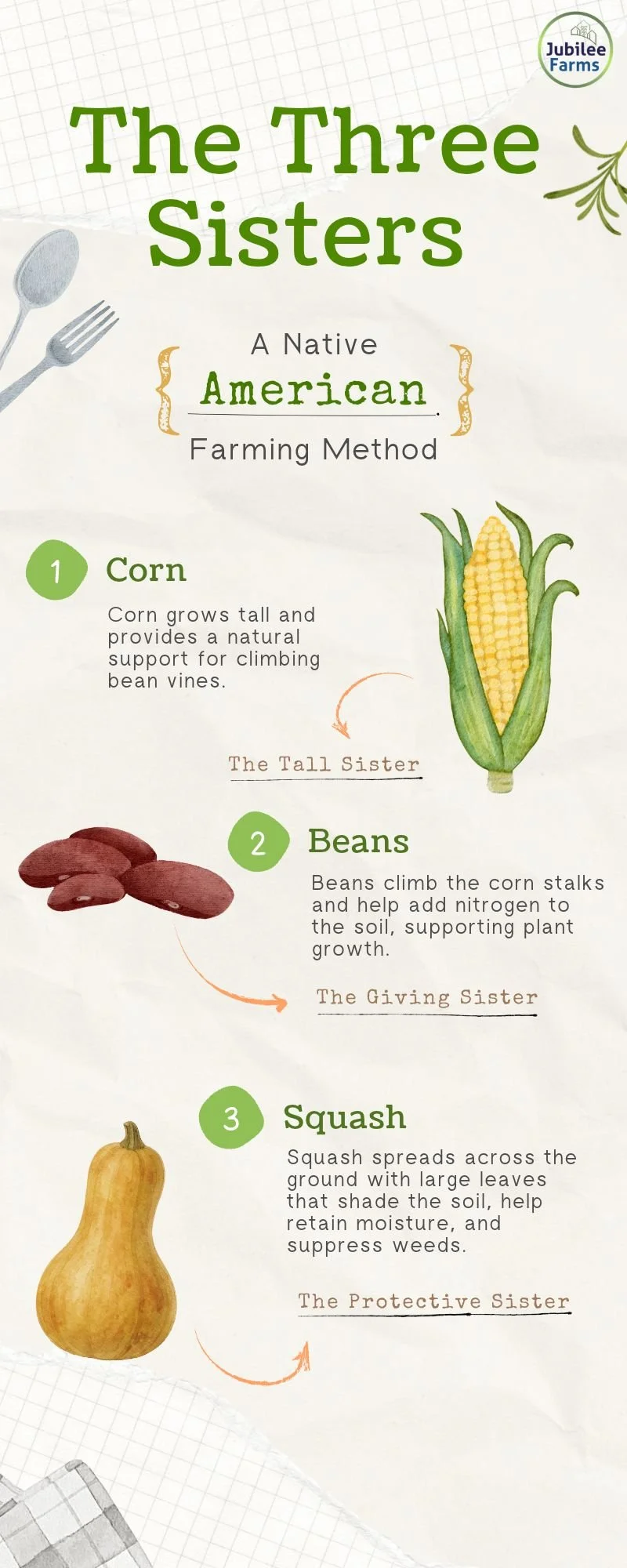
Corn, the Tall Sister, grows straight and strong, giving the beans a natural pole to climb.
Beans, the Giving Sister, climb the corn and work with bacteria in their roots to add nitrogen to the soil, a nutrient all three plants need.
Squash, the Protective Sister, spreads its broad leaves across the ground. The leaves shade the soil, hold in moisture and crowd out weeds. Prickly vines also help keep hungry animals away.
The result is a small, self-supporting garden that needs less water, less weeding and no synthetic fertilizer.
Good for the soil, good for the table
The Three Sisters work together on the plate too. Corn provides carbohydrates for energy. Beans add protein and fiber, and they supply amino acids that corn lacks, so the two together make a more complete protein. Squash brings vitamins, minerals and healthy fats from its seeds.
Dried corn and beans and hardy winter squash also store well. That helped communities eat well through the winter, long after the harvest was in.
What the Three Sisters teach us at Jubilee Farms
The lesson reaches beyond farming. Jubilee Farms began as a partnership between Jubilee Housing and Fresh Ministries. Together, we are turning underused space in an affordable housing building into a source of fresh food and job training. Housing, sustainability and good jobs are stronger together, just like corn, beans and squash.
Our mission is simple: provide fresh food, train people for living-wage careers and nurture communities. The Three Sisters remind us that this kind of work is not new. Indigenous farmers have shown for thousands of years that the healthiest harvests grow from caring for one another.